
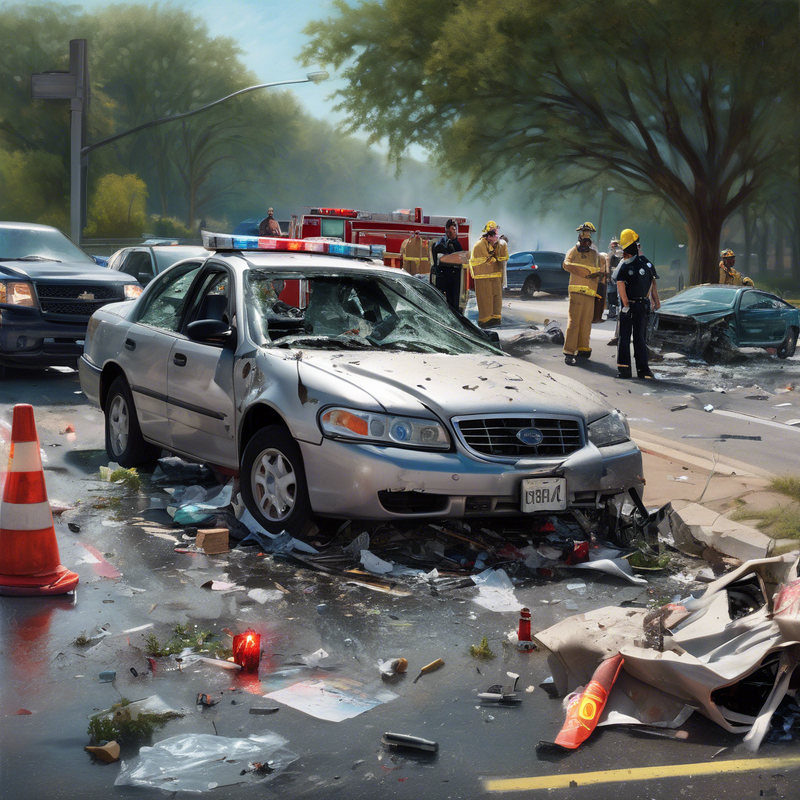
Tragedy on West Lake Houston Parkway: Reckoning with the Loss 💔
As the sun set gently over West Lake Houston Parkway, its golden rays cast an illusion of peace, an irony starkly juxtaposed with the chaos that unfolded mere hours earlier. The recent crash—a lethal collision that left multiple lives shattered—invites us to step back and ponder not just the immediate catastrophe, but the broader implications surrounding road safety and the human condition. How many tragedies must we witness before we confront our collective culpability? 😢
The accident not only claimed lives but reverberated through the community, rippling outwards like the shockwaves of a stone dropped in a serene lake. 🏞 The shock left behind is palpable, as residents grapple with the stark reminder that life can change in an instant. The intersection where it occurred, usually bustling with the mundane rhythm of daily commutes, now carries an echo of sorrow, turning a familiar path into a tragic landmark.
Statistics vs. Stories
It is easy to drown in numbers; a mere sum of statistics can dull the sharp pain of loss. Recent reports indicate a growing number of vehicular incidents across our highways. In 2021 alone, the National Highway Traffic Safety Administration reported over 38,000 fatalities on U.S. roads. Yet each figure is not merely a statistic—it represents fathers and mothers, friends and siblings, and plans that lay unfulfilled. 📉
So how does one remember the individuals behind the statistics? How do we process the grief and anger that erupt in the wake of such devastation? A mother who lost a child in an accident echoes sentiments shared by many: “No one should have to feel what we are feeling. It’s devastating.” Her words hang heavy in the air, a striking antithesis to the previous routine of everyday life that now feels unbearably distant.
A Community in Mourning
Responses from the community have been a blend of sorrow and unity. Vigils organized in memory of the victims emphasize the deeply human need to honor those lost. It’s as if the very act of gathering—lighting candles and sharing stories—rebels against the silence that threatens to envelop their memories. Isn’t it remarkable how our survival instincts can sometimes compel us to weave connections in the face of tragedy? 🕯️ Each flickering candle symbolizes hope and remembrance, illuminating not just the darkness of loss, but also the resilience of the human spirit.
However, a disturbing irony lurks just beneath the surface: after gathering to mourn, it is the very road where they weep that remains perilously unchanged. How can we honor those lost without taking tangible steps toward improved safety measures? Emotional moments, as evanescent as the flames of vigil candles, become stifled memories if not followed by concrete action.
Steps Toward Change
Perhaps these tragedies can serve as catalysts for change. Advocates for road safety often propose enhanced signage, speed bumps, or even community-driven campaigns to raise awareness. Is it not an abomination that deadlier roads provoke more debates than tangible actions? ⚠️
Confronting our biases towards personal accountability is vital. If we consider driving merely a convenience, we are wont to ignore our responsibilities behind the wheel. We must educate ourselves regarding the dangers of distractions—cell phones, loud music, or simple fatigue. The very act of driving transforms from a mundane chore to a conscious decision every time we slide behind the wheel. How can we advocate for safety while we ourselves recklessly endanger lives?
In Remembrance and Action
So, what can we leave this tragedy with, alongside the weight of grief? Perhaps it is the call for vigilance, responsibility, and a genuine commitment to change. We can no longer afford to become desensitized to loss brought about by our actions. As those who gather to remember and mourn, let us forge an alliance grounded in action—whether through legislative advocacy, education on road safety, or community engagement.
In the end, life along West Lake Houston Parkway will continue. Yet, in its quietude, let us listen closely and remember that behind each passing car is a story, a family, a sense of loss far deeper than any number could convey. Each approach to that stretch of road becomes not just a habit, but a silent pact to honor those lost. May this accident illuminate the path to a safer future, not just for West Lake Houston Parkway, but for all roads we navigate. 🤝

I believe sharing personal stories is crucial in understanding the impact of tragedies. Statistics alone cant capture the human emotions.
Do statistics truly capture the impact of tragedy on West Lake Houston Parkway? Stories seem to paint a more powerful picture. What do you think?
Im torn about the focus on statistics vs. stories in the article. Both are important, but how do we strike a balance? 🤔
Wow, do you think sharing personal stories or just stats is more impactful in healing a community after tragedy? 🤔
Can statistics truly capture the depth of tragedy and healing in a community? Share your thoughts! 🤔 #CommunityResilience
Do statistics really capture the heartbreak and resilience of a community in mourning? Share your thoughts! 🤔📊 #DeeperThanNumbers
Do statistics truly capture the impact of tragedy? Share your thoughts on balancing data with personal stories in healing a community.
Do statistics really capture the depth of tragedy on West Lake Houston Parkway? Lets hear the stories and emotions behind the numbers.
Do we rely too much on statistics to understand tragedies, or do personal stories hold more weight in healing a community? 🤔
I appreciate the emphasis on storytelling, but do stats hold more weight in creating change? Both are vital, but whats your take? 🤔
Stats provide tangible evidence for change; stories evoke empathy and connection. Balance is key.